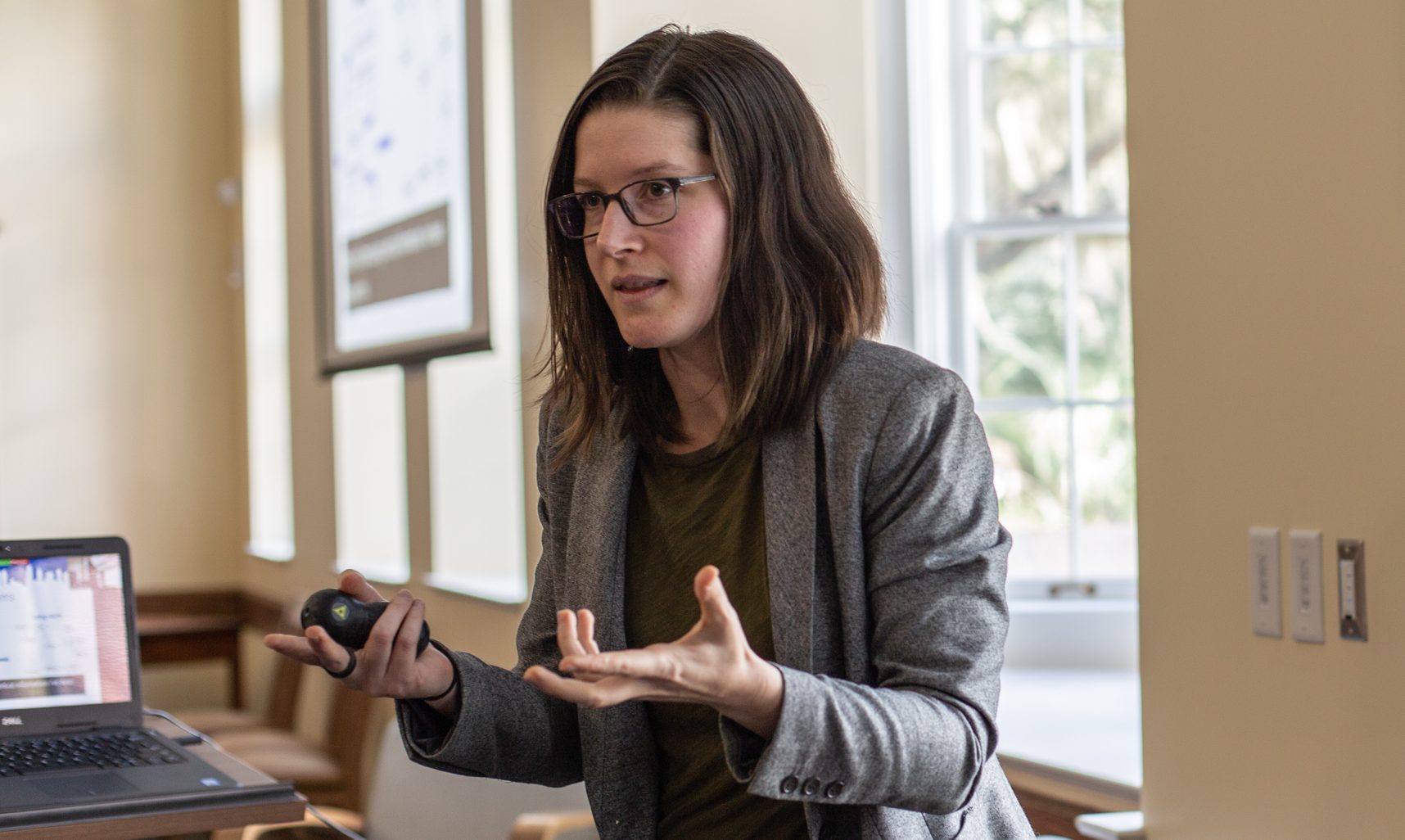
If you are interested in hearing about my work or in me giving a talk to your group, please see my full-length talks below.
Computing Across the Curriculum: CS Knowledge and Skills that Everyone Values
This talk explores the integration of computing in non-computer-science classes and emphasizes the identification of relevant computing concepts for general computational literacy. It discusses the collaborative design of integrated computing activities with non-computer-science teacher education faculty and presents both qualitative and quantitative analyses of computing concepts taught in these activities. The talk also focuses on paradigms for integrated computing activities, existing computing concepts, opportunities for expanding computing tools, and preparing students for standalone computing and programming courses. It concludes with recommendations for teacher preparation and integrated computing activities in primary and secondary schools, as well as strategies to increase teacher buy-in and coherence with current education practices. My overall goal is to improve current practices based on emerging data and identify opportunities for growth in computer science knowledge and skills to support teaching, learning, and computational literacy.
Learning Sciences and Computing Education Research: Theories, Methods, and Designs
Computing education research draws from theory and methodology in the social sciences, such as education, psychology, and learning sciences, to conduct research with learners. Learners are not like molecules in a beaker or mice in a cage; they bring a lot of variability to the research environment, both from learner to learner and within learners from context to context. Social sciences have developed theories and methods to deal with this variability, which are discussed in this talk. I also discuss other features of research design related to reliability, validity, and generalizability of results. The talk focuses on methods and designs particularly relevant in computing education.
The Biology and Psychology of Learning
Learning involves many factors, both internally in the brain and externally in the environment. This talk focuses on internal factors, featuring the most reliable and effective methods to improve learning based on neurological and psychological mechanisms. While the talk discusses how these mechanisms can be applied to improve learning, it also discusses how the mechanisms work so that educators and students can appropriately adapt interventions without losing efficacy. Though examples from computer science education are used, these principles apply to many areas of education and learning.
10-minute Recording from NWIT Conference on the Psychology of Learning →
Building Theory in STEM/ Computing Education
The computing education research field frequently calls for theory-building work to better explain the mechanisms of how people learn computer science. This talk discusses two theories that have been developed based on a synthesis of work across multiple fields to explain phenomena frequently seen in computing education. The first theory, Spatial Encoding Strategy theory, proposes a mechanism to explain how spatial skill training improves generalized problem-solving while all other forms of brain training produce only localized results. The second theory, Multiple Conceptions theory, proposes a mechanism to explain how both direct instruction and constructivist instructional approaches can be designed to guarantee successful results. They draw upon instructional approaches from various STEM fields, educational psychology, and learning sciences.
 Lauren Margulieux